Healthcare
-
Energy Efficiency Study & Decarbonization Roadmap
Woodland Pond at New PaltzThe Challenge
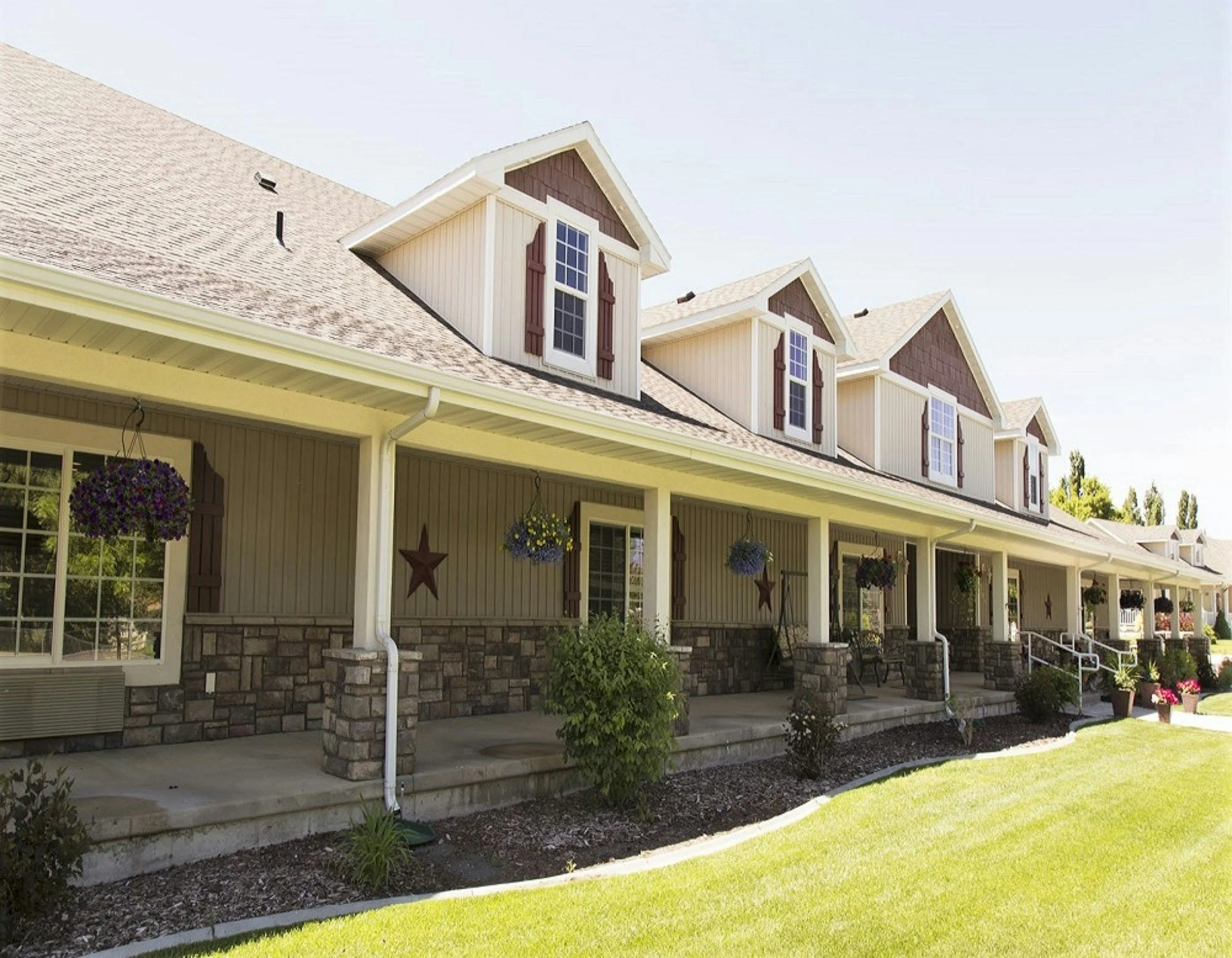
Woodland Pond is a continuing care retirement community in New Paltz, New York, consisting of independent living apartments, shared community facilities, healthcare spaces, dining areas, recreational amenities, and support services spread across a large campus environment. The facility encompasses more than 336,000 square feet of occupied space serving residents 24 hours a day, 365 days a year.
After more than a decade of operation, many of the campus's HVAC, refrigeration, and domestic hot water systems were approaching the point where major replacement and upgrade decisions would soon be required. Woodland Pond needed a clear understanding of where energy was being consumed, which systems offered the greatest opportunity for improvement, and how future capital investments could reduce operating costs while maintaining a comfortable environment for residents.
What I Did
I led an ASHRAE Level II energy study performed through the NYSERDA FlexTech program, focusing on the facility's mechanical, controls, and refrigeration systems. The project involved a detailed evaluation of equipment serving independent living areas, healthcare facilities, community spaces, kitchens, pools, and support areas across the campus.
The work started with a comprehensive field investigation, including equipment inventories, operational reviews, trend analysis, and on-site monitoring. I deployed data loggers throughout the facility to collect temperature and CO₂ data, reviewed Building Automation System trends, and worked closely with facility staff to understand how systems were actually operating compared to their original design intent.
Using utility data, field measurements, and engineering analysis, I evaluated a broad range of energy conservation measures, including HVAC upgrades, ventilation improvements, refrigeration optimization, pool dehumidification enhancements, boiler replacements, and advanced control strategies. In total, the study analyzed more than 30 major HVAC rooftop units, multiple air handling systems, over 170 residential heating and cooling units, refrigeration equipment, and central domestic hot water infrastructure.
A major part of the effort involved translating technical findings into an actionable implementation plan, allowing Woodland Pond to prioritize projects based on cost, savings potential, operational impact, and long-term equipment replacement needs.
The Result
The study delivered a practical roadmap for improving energy performance across one of the Hudson Valley's largest senior living communities.
The recommended projects included upgrades to ventilation controls, HVAC systems, refrigeration equipment, and domestic hot water infrastructure. Collectively, the recommended measures were projected to cost approximately $92,000 while generating roughly $64,000 per year in utility savings, resulting in a simple payback of approximately 1.4 years.
The analysis demonstrated the potential to achieve an estimated 22% reduction in overall facility energy consumption, providing Woodland Pond with a clear and financially justified path toward significantly lower operating costs and improved long-term sustainability.
The project was partially funded through the NYSERDA FlexTech program, helping reduce study costs while providing facility leadership with the technical information needed to make informed capital planning decisions.
Project completed in a previous engineering role.
-
South Niagara Hospital Energy Performance & Measurement Strategy
The Challenge
The new South Niagara Hospital is one of the largest healthcare infrastructure projects ever undertaken in Ontario, a 1.3 million square foot acute care facility being delivered through a Design-Build-Finance-Maintain (DBFM) public-private partnership.
Unlike a traditional design project, the consortium responsible for the hospital's long-term operation is contractually accountable for meeting specific building performance requirements over decades of service. If actual energy consumption exceeds agreed-upon targets, the financial consequences can be significant.
This creates a unique challenge: the design-phase energy model cannot simply demonstrate compliance on paper. It must provide a realistic and defensible prediction of future performance, and the facility must be equipped with the metering infrastructure necessary to verify those results once the hospital is operational.
Adding to the complexity, modern healthcare facilities are among the most energy-intensive building types in North America. Strict requirements for ventilation, infection control, patient comfort, and around-the-clock operation make balancing energy efficiency and clinical performance particularly challenging.
What I Did
In my role on the energy performance advisory team, I supported the development and review of the energy measurement and verification strategy used to bridge the gap between design assumptions and future operational performance.
My work focused on ensuring the project's energy models, metering requirements, and performance verification framework aligned with the long-term obligations established under the DBFM contract.
Working closely with building energy modelers and mechanical and electrical design teams, I reviewed simulation inputs and performance assumptions, helping validate that key energy drivers could be measured and tracked once the facility entered service.
I participated in the development of an IPMVP-based Measurement and Verification (M&V) approach that defined how building performance would be evaluated over time. This included identifying critical thermal and electrical metering points, verifying that required data could be captured through the Building Automation System, and ensuring the metrics being modeled during design could ultimately be verified in operation.
The role also involved evaluating energy performance risks associated with changing operating conditions, occupancy patterns, and hospital-specific loads, helping project stakeholders understand how these factors could influence long-term contractual performance targets.
Throughout the project, I served as a specialized energy performance advisor, providing independent technical oversight intended to reduce the gap between modeled and actual energy use.
The Result
The project established a comprehensive framework for measuring and verifying energy performance in one of Canada's most complex healthcare facilities.
By aligning whole-building energy modeling, metering infrastructure, and long-term performance verification requirements, the team helped create a clear path for tracking energy consumption throughout the facility's operational life.
The resulting M&V strategy provided project stakeholders with greater confidence that contractual energy targets could be objectively monitored, evaluated, and managed after occupancy, reducing long-term performance risk for a $3.6 billion healthcare infrastructure investment.
Project completed in a previous engineering role.
-
Energy Performance Monitoring & Contract Compliance
North Island Hospitals | Vancouver Island, British ColumbiaThe Challenge
The North Island Hospitals project consists of two acute care hospitals serving Vancouver Island, British Columbia: the Comox Valley Hospital and Campbell River Hospital. Delivered through a public-private partnership (P3), the facilities operate under long-term contractual energy performance requirements that extend well beyond construction and occupancy.
What I Did
As part of Morrison Hershfield's role as the Independent Energy Consultant for North Island Hospitals, I helped evaluate operational energy performance and verify compliance with the project's long-term energy requirements. Morrison Hershfield had originally developed the facility energy models used to establish the Design and Construction Energy Targets during project delivery and later remained involved during the operational phase to support annual energy target reviews.
My work focused on reviewing utility consumption, sub-metering data, operational changes, and weather-adjusted building energy models for both healthcare campuses. Using EnergyPlus-based simulation models, I analyzed the impact of actual operating conditions and updated Annual Energy Targets to reflect approved adjustment methodologies contained within the project agreement.
The analysis required detailed review of energy end uses including heating, cooling, ventilation, domestic hot water, humidification, lighting, medical facility support systems, pumps, and plug loads, all of which were separately evaluated against model predictions and metered performance.
I also participated in the development of annual energy certification reports documenting building performance, validating energy targets, analyzing model-to-meter variances, and supporting gainshare and painshare calculations required under the P3 contract framework.
The Result
The analysis demonstrated that both hospital campuses successfully exceeded their contractual energy performance requirements during the evaluation period.
For the Comox Valley facility, actual targeted energy consumption was lower than the adjusted contractual target for both electricity and natural gas use, resulting in a documented energy gainshare payment of approximately $16,500 while avoiding all energy performance penalties.
At the Campbell River facility, actual performance also exceeded contractual requirements, generating the project's maximum allowable gainshare value of $53,100 through significantly lower-than-target energy consumption.
Across both facilities, the work helped establish a transparent and technically defensible link between original energy design assumptions and real-world hospital operation, providing project stakeholders with confidence that energy performance obligations were being measured, evaluated, and administered fairly throughout the operational phase.
The engagement involved performance verification for two major acute-care hospitals, representing more than 74,000 GJ of annual electricity consumption and over 25,000 GJ of annual natural gas consumption.
Project completed in a previous engineering role.
-
Loretto Health & Rehabilitation — Comprehensive energy audit for Loretto's 583-bed skilled nursing, rehabilitation, and memory care facility on its Brighton Campus in Syracuse, NY. Evaluated HVAC upgrades, energy recovery opportunities, free cooling strategies, and on-site fuel cell generation to support long-term capital planning, reduce operating costs, and improve system reliability in a 24/7 healthcare environment.
Greater Binghamton Health Center Transitional Living Unit — Commissioning of a 15,000 sf healthcare facility in Binghamton, NY serving transitional living and behavioral health functions. Performed functional testing and verification of gas-fired furnaces, condensing units, domestic hot water systems, exhaust systems, and roof ventilators to confirm proper operation and support reliable facility performance.